

Grown quickly, now hard to learn
Software that grew quickly and is now hard to learn or expensive to change.
Product and UX design for software that has to stay coherent as it grows — maps, prototypes, and a library teams can share.
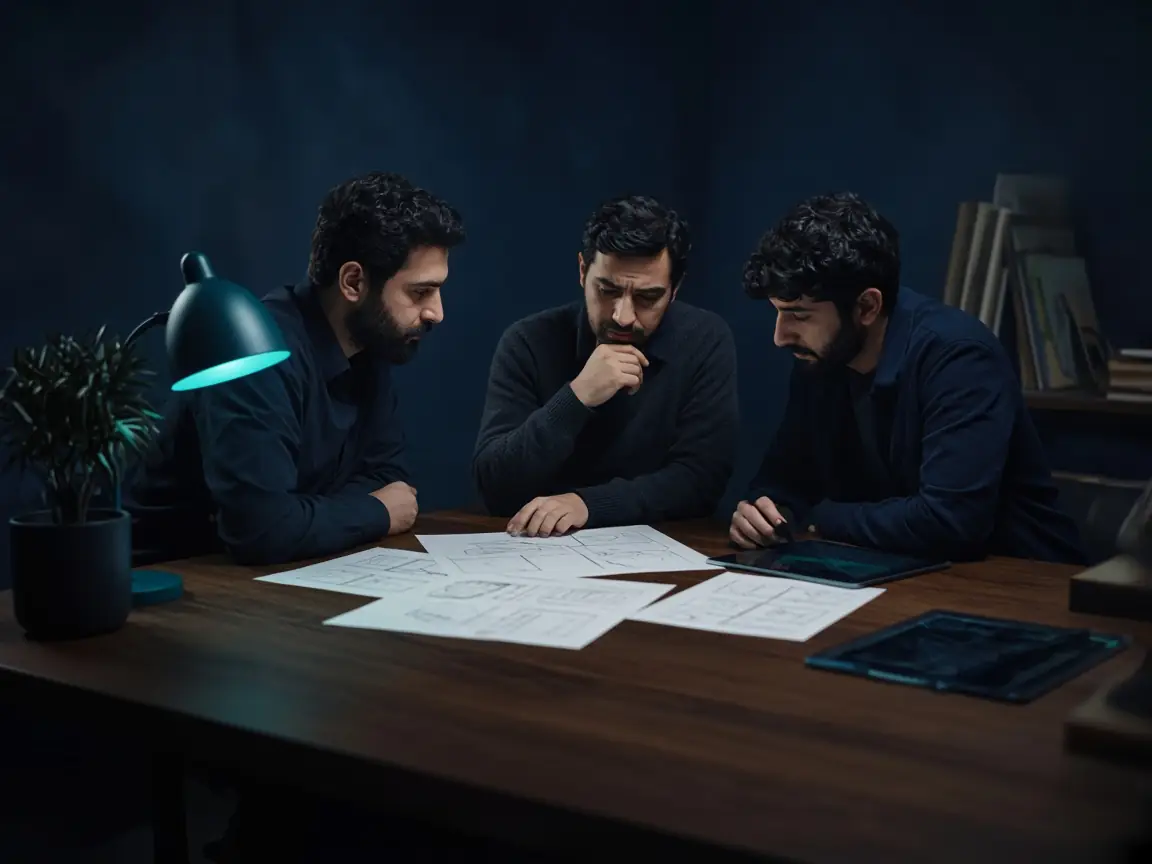
Dense software becomes expensive when nobody owns the system. Every new screen is then an argument, and users feel the seams. We come in to map the jobs that hurt, to design the flows that matter in this phase, and to leave a component library — with names and rules — that engineering can actually build from.
We prototype in slices you can click, and we test when we can reach the people who use the product. We will say when a test is too thin to count on, and we will write down what this phase will not touch. That is how a product stays coherent instead of collecting one-off screens.
We work with your product manager and engineers, not around them. If you want us to stay for the build, we can. If you want a tight specification and a clean handover, we can do that too.
From our studio in Homs, bilingual interfaces are designed from the components: Arabic and English as first-class paths, not a late squeeze.
These are the patterns we see before we begin. We name them plainly so the scope of the work can be honest.
Software that grew quickly and is now hard to learn or expensive to change.
Product teams without a shared component library, so every screen is a new argument.
Tools used in Arabic and English that feel finished in only one of them.
Clear pieces that belong in the phase, written so you can see what the work covers.
A map of the product so people can find their way without being taught.
Shared pieces the team can reuse, so every screen is not a new argument.
Motion that explains a change, not decoration that slows the work.
We watch real people use the work, then we change what gets in the way.
A careful pass so more people can use the product, in both languages.
A sequence we return to on every project, with the title and the full description written in the open.
Users, jobs, and the flows that are actually painful — not a redesign of everything at once.
Information architecture, then clickable slices you can test, not decks you can only admire.
A component library, interaction, and motion that can actually ship with your engineers.
Short, honest sessions and a punch-list the build team can work through.
Files and reviews you can keep working with after handover — not a presentation that ends in the last meeting.
The flows that matter, and the ones we will not touch in this phase.
Clickable slices, not a wall of static frames.
Named, documented, and ready for the build.
What to fix, and how we work with your engineers or stay to build.
General ranges for a typical scope. The final timetable is written after a first conversation, according to the size of the work.
A testable slice of a product often takes several weeks. A broader system — library, several flows, and a handover — is usually a longer engagement, agreed after the first slice has taught us something.
We work from Homs, author Arabic and English together, and keep design and build in one team through handover.
We are a studio based in Homs, Syria — close to the markets we design for, and easy to talk to.
Arabic and English are authored together, not treated as a late translation.
Scope and timelines are written plainly, including what the work does not include.
Design and build sit in one team, so the file you approve is the file that can ship.
We stay for the handover: a kit, a walkthrough, and a clear path for the next phase.
Direct answers to what is usually asked before the work begins.
Both. We can hand a tight spec to your engineers, or stay for the build with our product team.
Yes. We start by mapping the current structure and the few flows that hurt most.
As a partner, not a ticket machine. Shared backlog, weekly decisions, and a written scope we can all point to.
Yes, in short honest sessions when we can reach the people who use the product. We will say when a test is too thin to count on.
It is part of the system: contrast, focus, structure, and language. We treat it as quality, not a late audit only.
Yes, and it should be designed that way from the components, not squeezed in after the English screens are done.
Tell us about the product or the brand, and we will come back with a clear first-phase plan.